Never Choose Wrong Aluminum Casting Process Again

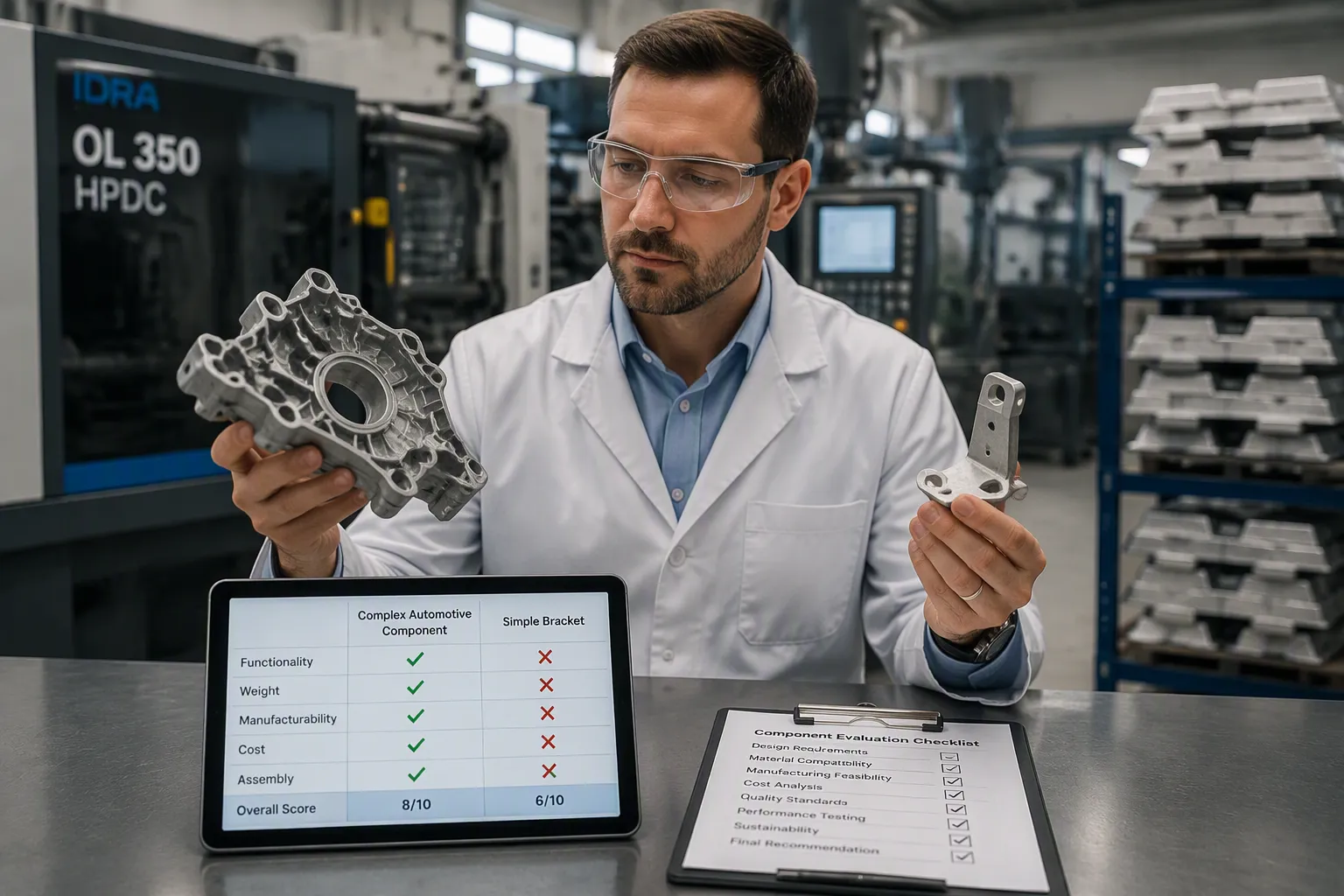
Which aluminum casting process is right for your part — sand casting or high pressure die casting? Write a professional evaluation before committing. Low-to-medium volume or large, complex parts favor aluminum sand casting. High volume, small-to-medium parts favor high pressure die casting. Choose wrong, and tooling dollars vanish, launch dates slip, and rework piles up. A clear, side-by-side comparison settles this decision once and for all.
Key Takeaways
Choose sand casting for low volumes or large, complex parts. It saves money on tooling and handles intricate shapes well.
Choose high pressure die casting for high volumes of small to medium parts. It offers tight tolerances and smooth finishes at lower unit costs.
Evaluate your project's volume, budget, and part design before committing. This prevents costly mistakes and ensures the right process for your needs.
Aluminum Sand Casting vs High Pressure Die Casting: A Complete Comparison
How Each Aluminum Casting Process Works
Aluminum sand casting and high pressure die casting take fundamentally different paths to shape molten metal. Each process suits distinct production scenarios. Understanding the mechanics behind both methods helps engineers and buyers make informed decisions.
Sand casting starts with a pattern. This pattern replicates the external shape of the final part. Workers pack sand around the pattern inside a container with two halves called the cope and drag. They remove the pattern to leave a cavity behind. The mold cavity receives a lubricant coating. The two halves close and clamp together securely. Molten aluminum pours through a gating system into the cavity. The metal cools and solidifies over time. Workers break the sand mold apart to remove the hardened casting. Shot blasting removes remaining sand. The sand reconditions for reuse. Trimming removes gates, runners, and flash. Finishing operations follow, including polishing or powder coating.
High pressure die casting follows a faster, more automated sequence. A steel die cavity receives a lubricant spray. This spray regulates temperature and acts as a release agent. The die closes and clamps under high force. Molten aluminum pours into a shot sleeve. A piston injects the metal into the cavity at pressures between 1,500 and 25,000 PSI. The metal fills the die in milliseconds. Pressure holds until the part solidifies. The die halves open. Ejector pins push the casting out. Trimming removes excess material from runners, gates, sprues, and flash. Secondary operations like machining or coating may follow.
The table below summarizes the core stages of each process.
Stage | Sand Casting | High Pressure Die Casting |
|---|---|---|
Mold preparation | Sand packed around pattern; mold halves clamped | Steel die sprayed with lubricant; die closed and clamped |
Metal introduction | Gravity pour through gating system | High-pressure injection (1,500–25,000 PSI) |
Solidification | Slower cooling in sand mold | Rapid cooling against steel die |
Part removal | Sand mold broken apart; casting removed | Ejector pins push casting from die |
Trimming | Gates, runners, flash removed | Runners, gates, sprues, flash removed |
Tolerances, Surface Finish, and Production Volume
Dimensional tolerances separate these two processes dramatically. ISO 8062 defines tolerance grades for castings. High pressure die casting achieves DCTG 4–7, the tightest as-cast tolerances available. At a casting dimension of 63–100 mm, DCTG 5 translates to a total tolerance of just 0.56 mm. Machine-molded sand casting reaches DCTG 8–12. At 100–160 mm, DCTG 11 allows 5.00 mm total tolerance. Hand-molded sand casting falls into DCTG 10–14 for large structural features without tight fit requirements.
Surface finish follows a similar pattern. Sand casting produces a typical surface roughness (Ra) between 6.3 and 25 µm. Green sand lands at the rougher end (12.5–25 µm). Resin-bonded sand improves to 6.3–12.5 µm. High pressure die casting delivers Ra between 0.8 and 3.2 µm. Modern facilities achieve finishes below 1.6 µm. Ford reports 1.6–3.2 µm for their die-cast aluminum components.
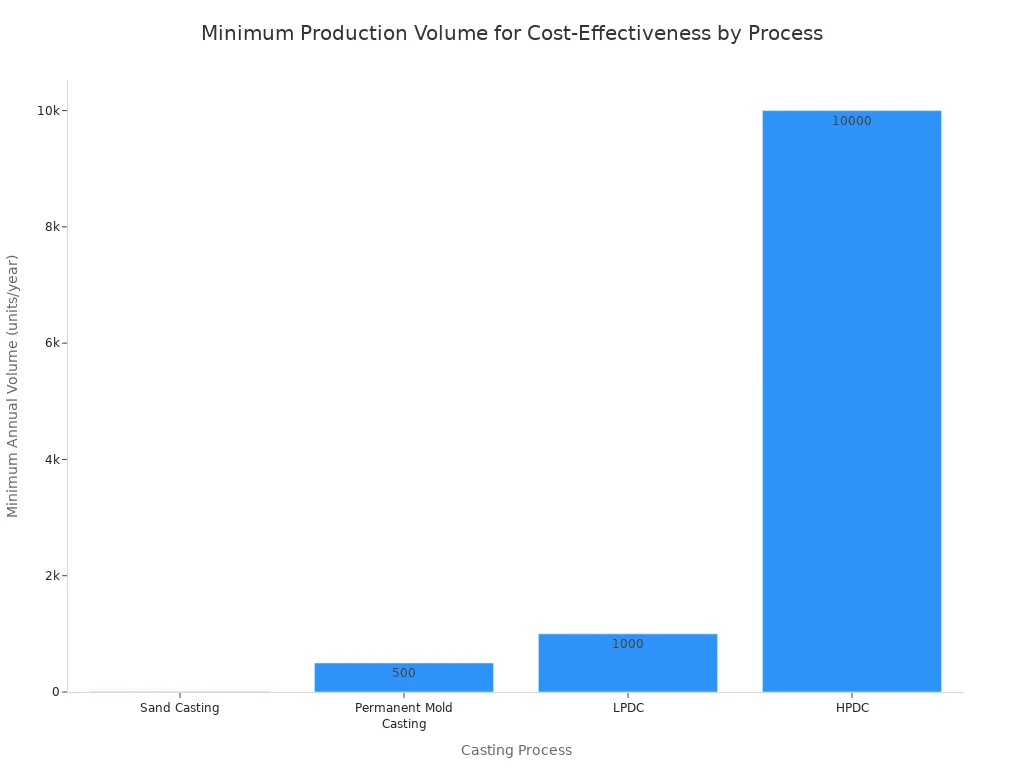
Production volume dictates process economics more than any other factor. Sand casting suits 10–2,000 units per year. High pressure die casting becomes cost-effective at 10,000+ units per year. Permanent mold casting covers 500–20,000 units. Low-pressure die casting (LPDC) handles 1,000–50,000 units. A quick decision guide helps narrow the choice. Prototype or low volume (under 2,000 units/year) favors sand casting or investment casting. Medium volume (2,000–20,000 units/year) points to permanent mold or LPDC. High volume (20,000+ units/year) demands HPDC or vacuum die casting.
Mechanical properties also differ between the two processes. The table below compares key metrics.
Property | Sand Casting | High Pressure Die Casting |
|---|---|---|
Fatigue limit | 60–90 MPa | 40–70 MPa |
Porosity volume | Higher (density 94–97%) | 2–5% by volume (density >99%) |
Fatigue life improvement (relative) | Baseline | 40–60% longer life (Kobe Steel) / 2.5–4× longer (Honda) |
Secondary dendrite arm spacing (SDAS) | 40–80 μm | 15–25 μm |
Typical internal defect size | Up to 3–5 mm | <2 mm |
Grain structure | Coarse, slower solidification | Fine, rapid solidification |
For A356 aluminum specifically, sand cast T6 parts reach 230–260 MPa tensile strength. Die cast as-cast parts reach 300–320 MPa. Yield strength favors sand casting slightly (165–185 MPa vs. 150–170 MPa). Elongation stays comparable at 3–5% for sand cast and 2–4% for die cast. Sand cast parts remain fully heat-treatable (T5, T6, and other tempers). Die cast parts resist heat treatment because porosity causes blistering at elevated temperatures.
Tooling Cost, Part Size, and Lead Time
Tooling cost represents the largest upfront investment difference between these processes. Sand casting uses wooden or resin patterns. These patterns cost between $500 and $7,500. A typical automotive component might require a $1,500 pattern. That pattern lasts approximately 5,000 parts. High pressure die casting requires hardened steel molds. These molds cost between $20,000 and $75,000 or more. The same automotive component might need a $22,000 die. That die lasts 100,000+ parts.
The break-even quantity sits around 1,298 parts. Below that number, sand casting wins on total cost. Above that number, die casting delivers substantial savings. Consider a real-world cost comparison for a medium-sized automotive component.
Production Quantity | Sand Casting Total Cost | Die Casting Total Cost | Lower-Cost Process |
|---|---|---|---|
1,000 parts | $33,500 ($1,500 tooling) | $38,200 ($22,000 tooling) | Sand casting (saves $4,700) |
5,000 parts | $161,500 ($1,500 tooling) | $103,000 ($22,000 tooling) | Die casting (saves $58,500) |
10,000 parts | $323,000 ($3,000 tooling) | $184,000 ($22,000 tooling) | Die casting (saves $139,000) |
50,000 parts | $1,615,000 ($15,000 tooling, 10 tools) | $832,000 ($22,000 tooling) | Die casting (saves $783,000) |
Part size and geometry also influence the decision. Sand casting accommodates large parts with complex internal cavities. The sand mold collapses after the pour, which allows undercuts and intricate shapes without draft angle constraints. High pressure die casting handles small-to-medium parts with simpler geometry. Draft angles become mandatory for part ejection. Wall thickness must stay uniform to prevent porosity and incomplete fill.
Lead time varies with tooling complexity. Sand casting patterns take weeks to produce. Die casting molds take months. A simple sand pattern might ship in 2–4 weeks. A hardened steel die might require 8–16 weeks for design, machining, and validation. Prototype timelines favor sand casting for speed. Production timelines favor die casting for cycle time. A sand casting cycle takes minutes to hours per part. A die casting cycle takes seconds to minutes per part.
The volume-and-complexity rule of thumb: low-to-medium volume or large, complex parts favor aluminum sand casting. High volume, small-to-medium parts favor high pressure die casting.
Engineers who write a professional evaluation before committing to a process avoid costly mistakes. They match the process to the part, not the other way around.
Pros and Cons of Aluminum Sand Casting and High Pressure Die Casting
Strengths and Limits of Aluminum Sand Casting
Sand casting delivers clear advantages for specific production scenarios. Tooling costs stay low compared to other methods. Wooden or resin patterns cost a fraction of steel dies. This makes sand casting the cheapest option for prototyping and small production runs. The process handles complex shapes with internal cavities and irregular geometries. Designers gain freedom to integrate mounting points, ribs, and optimized wall thickness for weight reduction. Sand molds withstand high temperatures and work with nearly any alloy. The sand itself recycles easily, which minimizes waste and cost. Aluminum cast parts offer an impressive strength-to-weight ratio, corrosion resistance, and an attractive appearance.
Limitations also exist. Sand casting provides lower dimensional accuracy and a rougher surface finish. Additional machining often becomes necessary. The process runs slower because each mold is single-use. Manual steps increase labor costs and production time. Defects like porosity, shrinkage, and air pockets can occur without careful control. Very intricate details may not come out as cleanly as with precision methods.
Advantages | Disadvantages |
|---|---|
Low strength | |
Ideal for lower volume needs | Low dimensional accuracy |
Handles complex shapes and sizes | Poor surface finish |
Patterns reusable with minimal wear | Prone to defects |
Eco-friendly sand recycling | Requires finishing |
Strengths and Limits of High Pressure Die Casting
High pressure die casting excels at mass production. High pressure fills every part of the mold, which allows complex shapes with thin walls. The process meets stringent appearance and dimensional tolerance requirements. Smooth surface finishes suit electroplating and other cosmetic treatments. Casting cycles run exceptionally short, especially for thinner-walled components. Manufacturers rely on this method for lightweight parts in automotive and consumer goods.
The drawbacks center on cost and material limits. Dies are expensive and complex to build. The process usually only becomes cost-effective for high-volume production runs. Porosity can occur from air pockets, wrong alloy choice, shrinkage, or improper mold filling. Heat treatment and welding are not recommended for porous casts because trapped air can expand and cause microcracks. The process also restricts itself to high-fluidity metals such as aluminum, zinc, or magnesium.
Advantages | Disadvantages |
|---|---|
Complex shapes via high pressure | High startup and operation costs |
Meets tight tolerances | Cost-effective only for high volume |
Smooth surface finishes | Porosity risks from air pockets |
Thin-walled components possible | Heat treatment and welding not recommended |
Short casting cycles | Limited to high-fluidity metals |
Common Aluminum Alloys: A356 Sand Casting, A380 Die Casting, and More
Alloy selection determines casting success. Two alloys dominate the industry. The table below shows the primary pairing.
Casting Process | Common Aluminum Alloy |
|---|---|
High pressure die casting | A380 |
Sand casting | A356 |
According to the Metal Casting Institute, the majority of aluminum high pressure die casting parts use 380-series alloys.
When to Use A356 Sand Casting for Strength and Pressure Tightness
A356 excels in applications demanding pressure tightness and structural integrity. Pump housings and valve bodies rely on A356 for leak-free operation. Impellers and high-velocity blower components benefit from its fatigue resistance. Marine fittings use A356 for saltwater corrosion resistance.
A356 ranks among the best aluminum casting alloys available. It delivers an optimal balance of strength, ductility and castability with tensile strength reaching 37 ksi in T6 temper and 5% elongation.
Engineers who write a professional evaluation recognize A356's T6 temper provides yield strength similar to 6061 aluminum.
When to Use A380 Die Casting for High-Volume Precision
A380 suits high-volume production of precision components. Consumer electronics use A380 for heat sinks, LED housings, and power supply enclosures. Home appliances incorporate A380 in washing machine frames and air conditioner compressor housings. The alloy offers excellent fluidity and casting ability. Maximum tensile strength reaches 330 MPa.
Key mechanical properties include:
Tensile strength: A356-T6 ~270 MPa, A380 ~324 MPa
Elongation: A356-T6 ~6%, A380 ~3.5%
Yield strength: A356-T6 ~200 MPa, A380 ~159 MPa
ADC12 and AlSi9Cu3: Best-Fit Applications
ADC12 serves as the automotive workhorse. Engine brackets, housings, and electronic enclosures use this alloy. AlSi9Cu3 (EN AC-46000) specializes in strength-critical applications. Gearboxes, clutch parts, and structural casings benefit from its high strength and wear resistance.
For most die casting applications, ADC12 (or its equivalent, A380) is considered the best choice.
Alloy | Application Sectors |
|---|---|
ADC12 | Automotive, Lighting, Energy housing projects |
AlSi9Cu3 | Energy |
Real‑World Custom Aluminum Casting Applications
Where Aluminum Sand Casting Excels
Sand casting serves industries that demand large, complex, and pressure-tight components. Aerospace and defense manufacturers rely on this process for critical parts. Consolidated Precision Products produces gearbox housings, missile bodies, Krueger flaps, and oil manifolds through sand casting. Military vehicles use forward and rear headers, engine structures, and airframe components. Submarines and fighter jets incorporate transmission housings, bearing housings, and integrated drive generator housings. Load-bearing elements for defense applications also come from sand casting.
General industrial applications cover a wide range. Pump bodies, impellers, and engine crankcases benefit from the design freedom of sand molds. Manufacturers produce bushings, fittings, and engine oil pans with this method. Gears, flywheel castings, and gas tanks also use sand casting. Machine parts and electronic equipment housings round out the list. Write a professional evaluation to confirm whether sand casting fits a specific part geometry and volume.
Where High Pressure Die Casting Excels
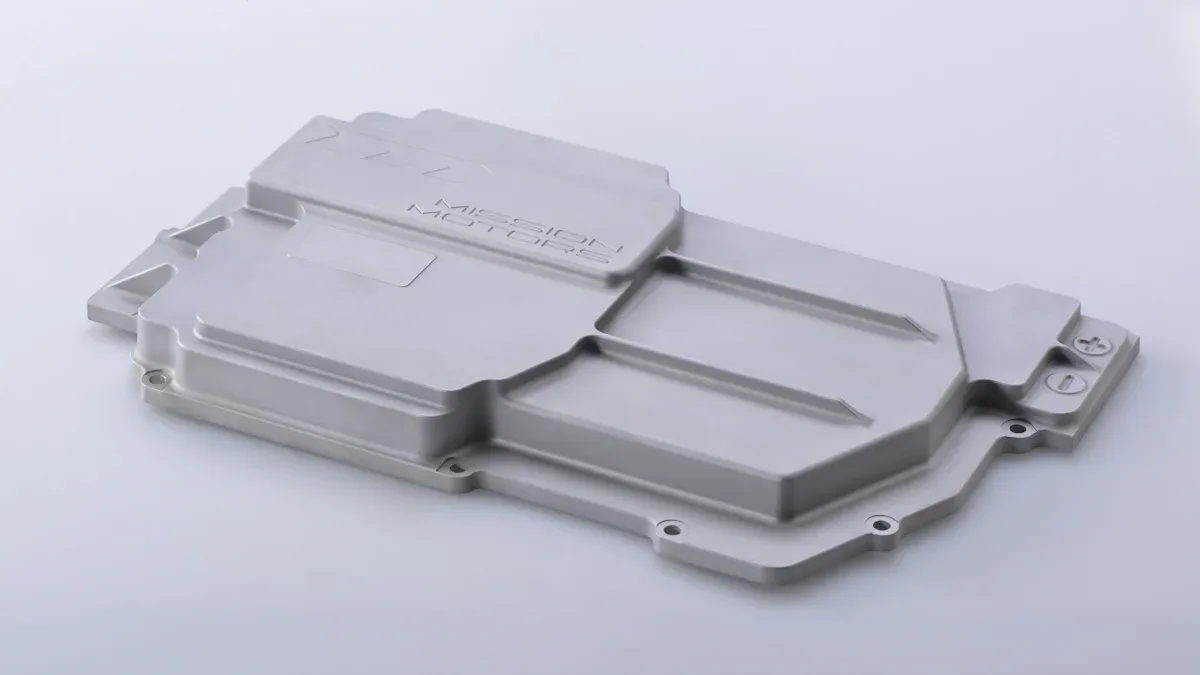
High pressure die casting dominates high-volume sectors. Automotive production uses this process for engine blocks, transmission housings, and cylinder heads. Door handles, wheels, and structural components come from die casting lines. Electric vehicle frames, battery housings, and thermal management parts rely on this method. Powertrain components, motor parts, and interior trim pieces also use high pressure die casting.
The electronics industry depends on die casting for consumer products. Laptop casings, USB connectors, and heat sinks require the tight tolerances and smooth finishes this process delivers.
Industry | High Pressure Die Casting Applications |
|---|---|
Automotive | Engine blocks, gearbox housings, door handles, cylinder heads, transmission housings, wheels, frames, structural components, EV frames, electronic housings, thermal parts, powertrain and motor parts, interior and exterior trim pieces |
Electronics | Laptop casings, USB connectors, heat sinks |
Investment Casting vs Die Casting: When a Third Option Makes Sense
Comparing Investment Casting vs Die Casting for Your Part
Sand casting and high pressure die casting cover most aluminum projects. Some parts demand a third path. Investment casting fills the gap between low-volume flexibility and high-volume precision.
Investment casting uses a wax pattern coated in ceramic. The wax melts away, and molten aluminum fills the ceramic shell. This method produces near-net-shape components with tight tolerances. It often eliminates secondary machining, especially for parts with intricate internal features or tight-fit assemblies. Parts cast through this method have a smooth surface finish, often as low as 125 microinches Root Mean Square (RMS). This reduces the need for additional polishing or finishing work.
Die casting remains the better fit for high-volume production of non-ferrous metals with low melting points, such as aluminum, magnesium, and zinc. However, its high tooling costs—resulting from the need for precision-machined, durable steel molds—can make it less cost-effective for low- or medium-volume runs.
Investment Casting | High Pressure Die Casting | |
|---|---|---|
Tooling cost | Generally lower and more flexible | Higher, since durable steel dies are needed |
Unit cost | Cost-competitive for low-to-medium volumes and complex geometries | Lower at high volumes once tooling is amortized |
Production volume fit | Low to medium volume, customized batches | Medium to high volume, repetitive production |
Cost-effectiveness driver | Better for small/medium batches or customized runs | Becomes more economical as tooling cost is spread over large volumes |
For aluminum parts, die casting may be more suitable when volume is high and geometry is stable.
Engineers should write a professional evaluation before selecting investment casting. The process suits complex geometries, customized batches, and parts that need minimal machining. Die casting wins when volume climbs and geometry stays stable.
Your Decision Guide for Choosing the Right Aluminum Casting Process
Engineers face a critical fork in the road when specifying aluminum components. The wrong choice wastes money, delays production, and compromises part quality. A structured decision guide removes guesswork from the process. This section provides five essential questions and a practical rule of thumb to guide the selection.
Five Questions to Ask Before You Commit
The first question addresses production volume. How many parts does the project require each year? Sand casting suits low-volume runs because each sand mold yields only one part. Large-scale output becomes inefficient unless the foundry automates the line. High pressure die casting thrives on high-volume production. One steel die can produce tens or hundreds of thousands of parts annually. A project needing 500 units per year points toward sand casting. A project needing 50,000 units per year points toward die casting.
The second question examines tooling budget and lead time. Can the project absorb significant upfront costs and wait for tooling? Sand casting uses relatively inexpensive molds and tooling. A wooden or resin pattern costs between $500 and $7,500. High pressure die casting requires hardened steel dies. These dies cost between $20,000 and $75,000 or more. Die tooling also demands longer lead times for design, machining, and validation. Projects with tight launch schedules and limited capital favor sand casting. Projects with longer timelines and higher budgets can justify die casting.
The third question evaluates part complexity and surface finish requirements. Does the part need fine details or a highly visible surface? Sand casting struggles to achieve fine details or high surface finishes. The process works poorly for highly visible products without extensive post-processing. High pressure die casting produces thinner walls and less draft. The as-cast surface finish satisfies most cosmetic requirements. A part with intricate lettering or a mirror-like finish needs die casting or secondary operations.
The fourth question assesses dimensional tolerance needs. How tight must the as-cast dimensions hold? Sand casting provides lower dimensional accuracy than steel molds. ISO 8062 tolerance grades for sand casting range from DCTG 8–12 for machine-molded parts. High pressure die casting holds tighter as-cast tolerances. DCTG 4–7 represents the tightest grades available. A part with critical mating surfaces may require die casting or post-machining. A part with generous tolerances can use sand casting without issue.
The fifth question considers porosity and insert feasibility. Does the part need pressure tightness or embedded inserts? Sand casting produces more porosity and shrink potential. The process also yields a poor surface finish without additional work. High pressure die casting generates turbulence and air pockets from forcing molten metal into the die. This creates similar porosity issues. Insert placement differs between the two processes. Sand molds often lack stability for inserts without risking sand particle contamination. Die casting lines are heavily automated. Placing an insert slows the die casting process dramatically.
The table below summarizes these five decision factors.
Factor | Aluminum Sand Casting | High Pressure Die Casting |
|---|---|---|
Production volume | Best for low-volume runs; each sand mold yields only one part, so large-scale output is inefficient unless automated | Best for high-volume production (tens or hundreds of thousands of parts annually); one steel die can produce thousands of parts |
Tooling cost and lead time | Relatively inexpensive molds and tooling | Tooling is expensive and requires longer lead times |
Part complexity and surface finish | Difficult to achieve fine details or high surface finishes; not ideal for highly visible products | Can produce thinner walls and less draft; offers a decent as-cast surface |
Dimensional tolerances | Lower dimensional accuracy than steel molds | Can hold tighter as-cast tolerances |
Porosity and shrink potential | More porosity and shrink potential; poor surface finish | More turbulence and air pockets from forcing molten metal, causing similar porosity issues |
Insert feasibility | Often not stable enough for inserts without risk of sand particles contaminating the metal | Heavily automated; placing an insert slows the process dramatically |
Engineers who write a professional evaluation before committing to a process avoid costly mistakes. These five questions provide a framework for that evaluation.
The Volume‑and‑Complexity Rule of Thumb
Production volume and part complexity drive the final decision. A simple rule of thumb captures the relationship between these two factors. Low-to-medium volume or large, complex parts favor aluminum sand casting. High volume, small-to-medium parts favor high pressure die casting.
Real-world scenarios illustrate this rule in action. A project requiring 10,000 aluminum brackets fits die casting perfectly. The low unit cost justifies the high mold cost despite the upfront investment. A project involving low-volume heavy iron parts uses sand casting instead. A project needing medium-volume precision stainless steel parts turns to investment casting. These scenarios tie production volume directly to process selection.
A decision matrix from industry practitioners evaluates five key factors: production volume, part complexity, required tolerances, surface finish, and target cost. Consider an aluminum housing example. High-volume production exceeding 50,000 units annually requires high precision and a smooth finish. Die casting becomes the recommended process over sand casting. This example shows how volume and complexity drive selection for aluminum parts.
Specific rules help engineers narrow the choice further. For aluminum parts exceeding 10,000 pieces, high pressure die casting is the standard recommendation. For complex internal passages, investment casting often wins. Die casting remains a viable alternative for aluminum parts at high volume. For parts weighing more than 500 kg, green sand or resin sand casting handles the job. For stainless steel or exotic alloys, silica sol investment casting provides the answer. For iron or steel parts requiring CT8 or better surface finish, shell mold or investment casting works best.
A sequential decision flowchart simplifies the process. The first step separates ferrous from non-ferrous metals. Iron and steel parts follow one path. Aluminum and zinc parts follow another. Non-ferrous parts move to high pressure die casting or gravity die casting. The next question asks whether the part exceeds 500 kg. Parts above this weight limit use green sand or resin sand casting. Parts below the limit continue through the flowchart. The third question checks surface finish requirements. A finish of Ra < 3.2 μm as-cast demands shell mold or investment casting. A looser finish requirement allows resin sand casting. The fourth question examines tolerance needs. Tolerances tighter than CT8 require investment casting. Looser tolerances allow shell mold casting. The fifth question checks for stainless or specialty alloys. Specialty alloys require silica sol investment casting. Standard alloys use shell mold or resin sand. The final question assesses internal geometry complexity. Very complex internal geometry requires investment casting. Simpler geometry uses shell mold casting.
The table below shows how volume drives cost and process selection.
Volume (pcs) | Die cost (USD) | Sand tooling (USD) | Die cast per-part (USD) | Sand cast per-part (USD) | Recommended process |
|---|---|---|---|---|---|
100 | 60,000 | 1,500 | 600.00 | 120.00 | Sand casting |
1,000 | 60,000 | 1,500 | 60.00 | 70.00 | Sand or die casting (depends on finish) |
10,000 | 60,000 | 1,500 | 10.00 | 40.00 | Die casting |
100,000 | 60,000 | 1,500 | 1.50 | 30.00 | Die casting |
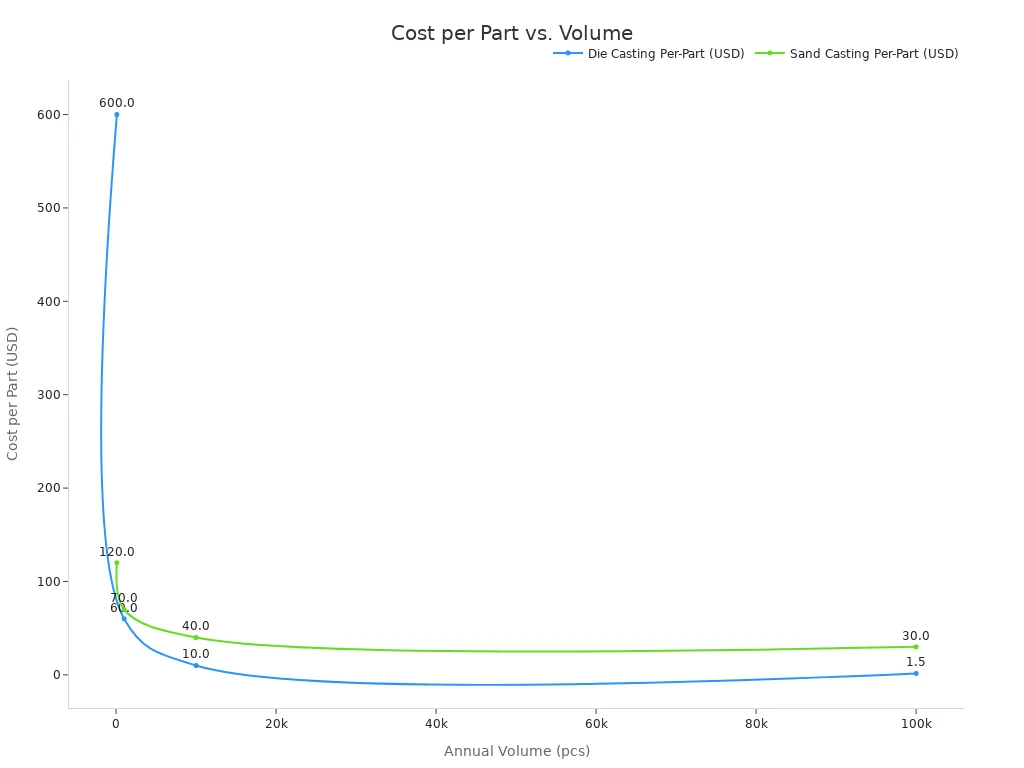
Economies of scale for die casting typically begin at around 50,000 pieces annually. Complex part configurations are generally well suited for die casting. The volume-and-complexity rule of thumb provides a reliable starting point for most aluminum casting decisions.
Selection driver | Die casting | Sand casting |
|---|---|---|
Production volume | Very high runs with repeatability | Low to medium runs or one-offs |
Design complexity | External detail, thin walls | Complex cores, large cavities, inserts |
Upfront cost | High die cost | Low pattern/mold cost |
Lead time to first part | Long (die making) | Short (pattern or direct sand mold) |
Engineers who apply this rule of thumb save time and money. They match the process to the part requirements rather than defaulting to habit. The next section concludes the guide and offers a path forward for custom aluminum casting projects.
Aluminum sand casting serves low-volume, large, or complex parts. High pressure die casting suits mass production, thin walls, and tight tolerances. Custom aluminum casting success depends on matching the process to volume, budget, and geometry. Engineers and buyers should send 2D/3D drawings to the team for a free process evaluation, alloy guidance, and a no-obligation quote. Fast turnaround and expert consultation ensure the right decision.
FAQ
Which aluminum casting process suits a new product with uncertain demand?
Sand casting fits this scenario best. Tooling costs stay low, and design changes remain affordable. Engineers can validate the part before committing to expensive steel dies.
How does a buyer choose between A356 and A380 aluminum alloys?
A356 sand casting delivers strength and pressure tightness for structural parts. A380 die casting provides high-volume precision and excellent fluidity. Write a professional evaluation of the part's mechanical requirements first.
What production volume justifies high pressure die casting tooling?
Die casting becomes cost-effective above 10,000 units annually. Below that threshold, sand casting saves money. The break-even point sits near 1,300 parts for total cost.